The River Warden
“He is then an angry god, a little condescending: he does not push, rarely drowns, does not raise the pestle of the great torrents. All his genius shows itself in insidious passes, in roundabout gentleness — and if now and then he raises his voice, it was only because they put a dam in front of him, a barrier.”
José Saramago, on being born in the Sierra de Albarracín, in Spain.
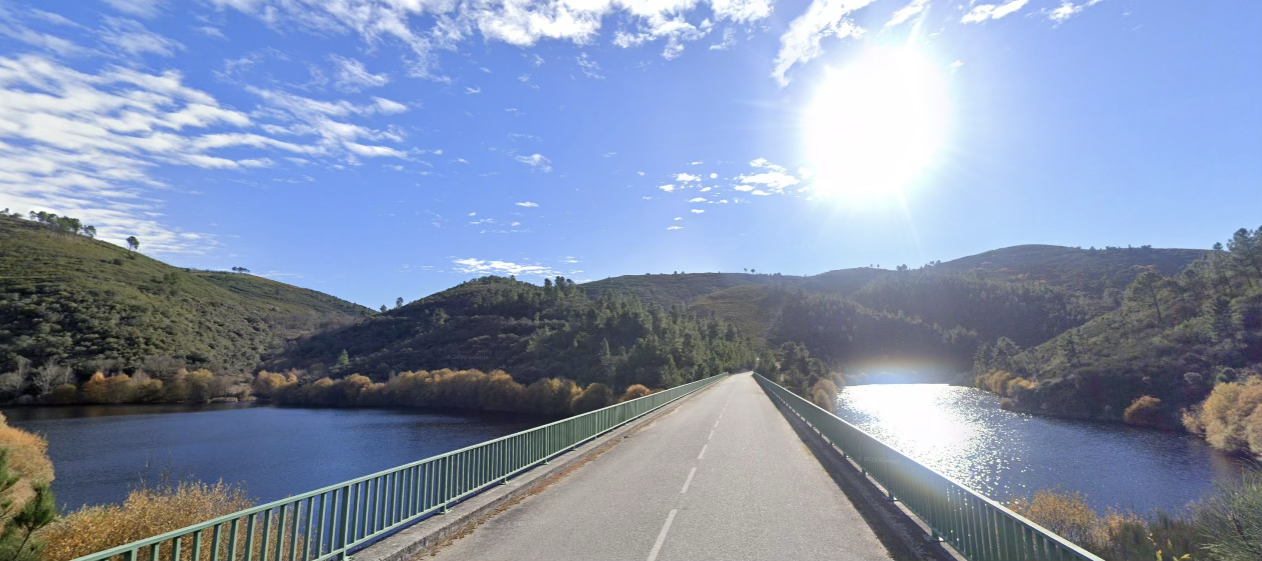
I walk across the bridge and watch the water, the green of the vegetation mirrored in the river that runs, and I ask myself where it ends up. I was never good at geography, maybe because you weren’t there to teach it to me, and you were the only teacher who held my attention the way you held the prosthesis to your stump. I’ve already forgotten which leg you were missing, but as I watch the water down below it doesn’t matter, because you ran so that I could walk, with or without a leg. Trees mean nothing to me if I can’t name them, I’d bet you knew their colors and ages by heart, how many times did you see them burn? Since you left, they’ve burned twice, and so have I. I burned, but I didn’t turn to ash, I was never strong enough to give up nor weak enough to start over, and I know only you would understand these things about me.
I walk from one end of the bridge to the other, like a caged animal, with nowhere to go. Why is it that even though you didn’t die here, it’s only in these waters, moving in gusts, that I recognize you — maybe because they’ve never called you by name. The old friends and acquaintances, the ones still alive, don’t recognize my features, I don’t come around here as much as I would if you were still here, yet they know and will always know who the River Warden’s granddaughter is. The well-traveled foreigner who avoids her family and her grandfather’s homeland, the cousins think I’m antisocial, that I don’t care about them, they have no idea that I can’t pass through here without wanting to jump, hoping you’ll come save me. I love living too much to come visit them, and I don’t love them any less, but they don’t understand me the way you did, they don’t know that I didn’t lose a grandfather, I lost a father.
I walk and I blame myself, because I asked Him — Him, or whoever it is that arranges the chess pieces down here — that if you had to be taken, that I be placed far away from you, I didn’t want to watch you go. I never got to say goodbye to you, I chose to be as far away as possible while they carried you to your final destination, your body’s at least. I tried visiting the grave where they laid you, and yet I don’t feel you there, I feel no grief when I see your name written on that cold stone because you’re closer to her. Two names and one verse, poetry’s only romance is in its simplicity. Her, the only woman you ever loved, and how you loved her, I always thought there could be no man like you, that you were the last good man in this existence. I’ve loved women, because I felt them as warmer, and I never believed I could fall in love with a man, but in the race against the system I found him, and how I love him. I love him so much I wish you could have known him, I imagine what you’d think of him, of his extravagant way of being, he’s the opposite of the cold man from the north and he’s everything I looked for.
I walk along the old path of the old bridge and imagine what it would feel like to touch the cold water with my toes. I don’t want to die, I don’t think I ever did, and in all my loneliness and sadness I always sought help, which is why the psychologist never diagnosed me with depression… Mom learned a lot about mental health, at first she didn’t understand… I don’t blame her because pain isn’t visible, but it’s a monster that, though dormant, wakes up out of nowhere and simply kills. No one feels our pain, that’s the greatest sin in the world, the root of all discord, no one understands each other, yet we pretend we do, because no one wants to feel alone. How did you feel pain? I tried writing to you, but people read crooked between straight lines. I wrote you a letter saying you were missed and that I’d see you soon. My teacher didn’t understand that fiction is the dream, of what one wishes for and not what one will have… Mom got scared and I stopped. Why write novels when our words get so literally twisted?
I would walk into the waters, but forgive me, I don’t want to see you yet. Even though there’s nothing that would make me as happy, there’s still plenty that can make me a little less unhappy, and those are the things I’ll keep going for. You won’t die as long as I can remember you, you live in me and in this river that runs and doesn’t stop. So many conversations I imagine between us, and in all of them I end up asking you: are you proud of me? and I know you’d answer with the truth, whatever it may be, and maybe this fictional version I’ve made of you would fall apart, or maybe I’d want to walk against the current and drown. I know you wouldn’t want that, though I admit there will always be a part of me that wonders if you’re on the other side, waiting to catch me, the river warden waiting on the other side of the river of life — it’s rather poetic, don’t you think? You, aware that everything that begins there passes through, and I too will end up there.
I will keep walking, for you and for those I still have here, because trying is all one can do when one loves, and I try. Do you know why I don’t promise? When you taught me the times tables, with your funny rhymes, you asked: “three times nine?”
And without getting an answer, you went on: “Twenty-seven, those who can’t keep a promise shouldn’t make one.”
I can’t, I never could, and I don’t promise, but I still try, despite it all. I wish I could remember you, could close my eyes and see your face and dream that you’re trying to warm my hands with yours the way you used to, you had the softest touch I’ve ever felt, but my hands are still cold. I know all I can do is think of you and write about the character I imagine you were and that I’ll never be. And one day, if the beyond exists and you’re waiting for me, I’ll read you these stories and you’ll either laugh at my innocence or appreciate the art of this writer who writes only to you, yet owes you nothing. Having nothing, I have everything, I read once, though I don’t remember where, and I feel it in my bones, as I shiver from the cold and walk back to my world, the one you left behind. Calm and quiet, I still remember when the cousins, with innocent mischief, stole your crutch and ran down the stairs, I never saw you so angry, and yet you were never violent. The river taught you so much, and that’s why I visit it here, to learn that art too — the art of living, of letting the river run.